2026 Education and Engagement Committee


Join the 2026-2027 Education & Engagement Committee
Applications for our 2026-2027 Education & Engagement Committee are now open! Join us in building leadership skills while deepening our understanding of decolonizing white supremacy culture.
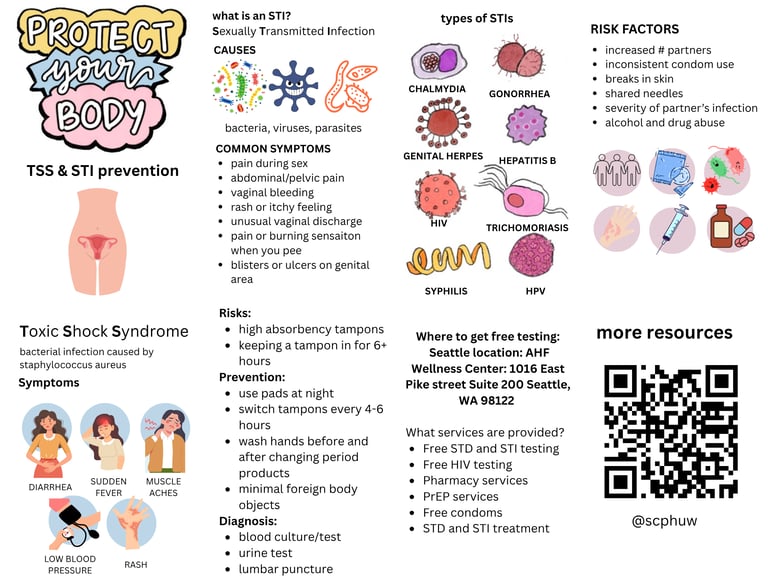
For the 2026 academic year, the Education and Engagement Committee turned their efforts towards two topics that greatly affect BIPOC communities: housing equity and food security. In addition, they created a reproductive health zine and distributed this within non-profit and mutual aid groups in Seattle.
Read more below about E&E's 2026 projects!
Housing Equity
Given that houselessness is inherently systemic and targets BIPOC, especially those who are black or Indigenous, E&E focused their efforts on housing equity as a racism and public health issue.
We partnered with Queen Anne Helpline, a local non-profit organization with a mission to prevent housing insecurity and increase accessibility to resources. As our vision for the Education and Engagement Committee aligned with this non-profit, we organized a clothing and resource drive where resources were donated to homeless and financially insecure individuals around the South Lake Union and Queen Anne area. Donations included blankets, linens, clothing, non-perishable foods, hats, and various other items. Here, we learned the logistics of organizing donation drives, as well as how to identify and support the needs of a community.
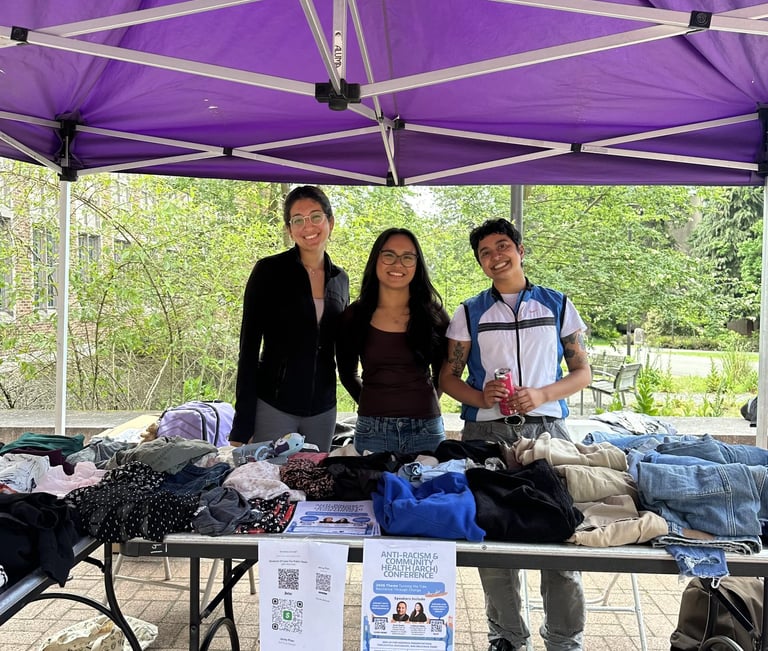
During the spring quarter, E&E organized a clothing swap by accumulating donations from UW students. These clothes were sold for profit and 50% of the proceeds were donated to Mapu Maia, an LGBTQIA+ clinic with Polynesian roots, in honor of Poly Day. This event was valuable to E&E because we were able to uplift LGBTQ+ communities by funding their healthcare while bringing the UW community together and providing clothing at a more accessible cost.
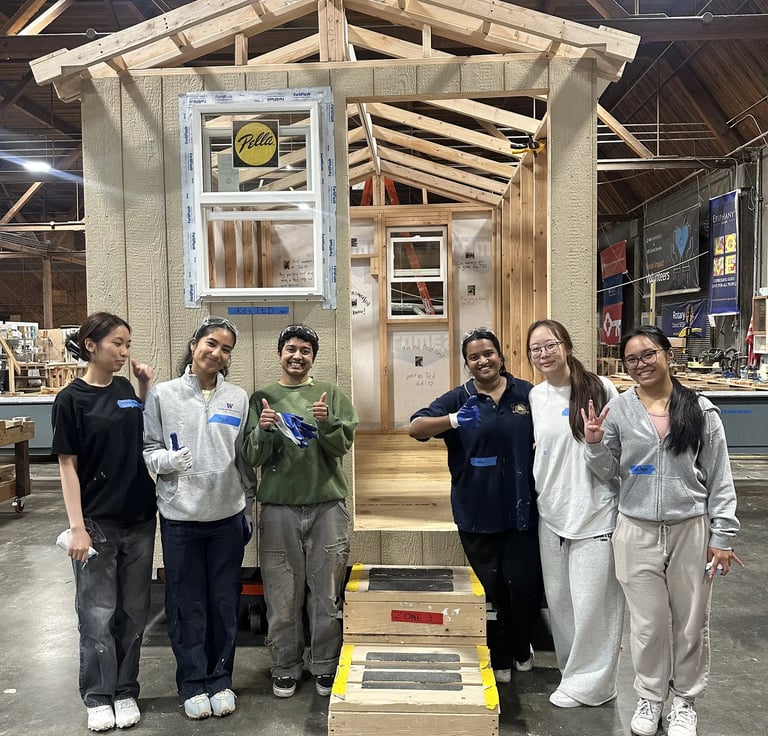
This year, we focused on food security and food justice. One way that we wanted to help our community was to volunteer at the University District foodbank. While volunteering, we helped bag groceries, replenish shelves, and talked to the people and families that were grabbing food. We noticed as people gravitated towards the fresh produce and talked about meals that they were planning on making and sharing with their families.
We also volunteered with Seattle Mutual Aid Coalition, helping with setup, passing out breakfast, talking with community members, and cleaning up. While volunteering, E&E was not only able to provide community members with breakfast but also connect with them and hearing their stories. Seattle Mutual Aid Coalition provides community members with a place of safety and most importantly of all, community. Throughout E&E's volunteer experience, we were able to witness the beauty of community. We collectively ensured that everyone was fed, and community members would even sing together. Seeing how important connection is within the community left a lasting impact on all of us who volunteered.
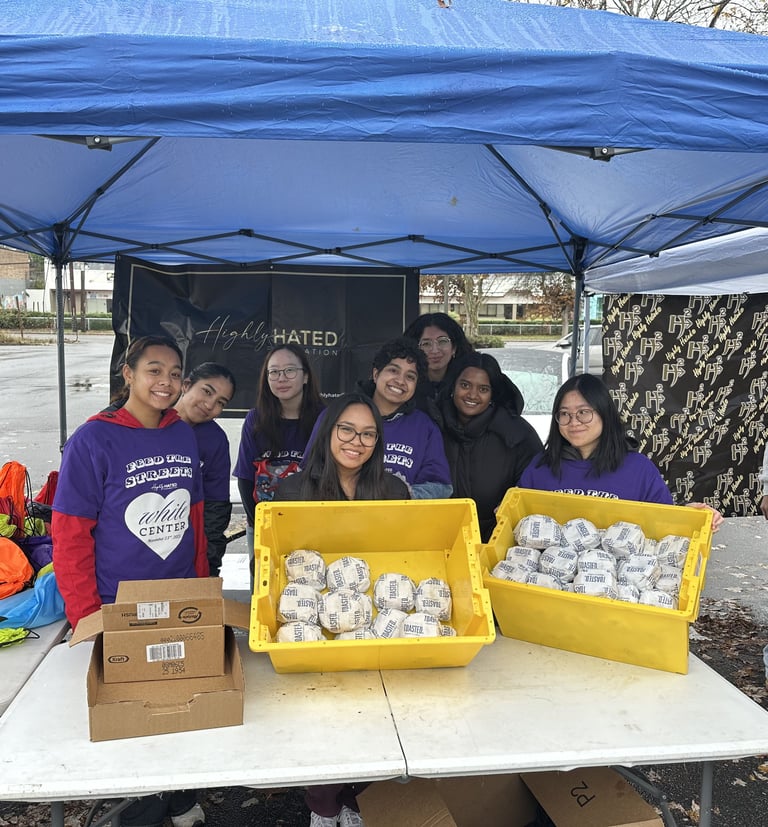
We also partnered with the Highly Hated Foundation to volunteer at their “Feed the Streets” event in White Center working alongside local youth to help support community members experiencing food insecurity. At the event, we helped distribute bagels donated from Toasted, served prepared meals, and handed out care bags with essential items. Afterwards we passed out remaining bagels in the U District Area and donated to Phinney Ridge Seattle Community Fridge.
Food Security
Reproductive Health Education
We developed and distributed reproductive health zines designed to make essential health information more accessible, engaging, and easy to understand. These zines provided straightforward information supported with visuals on STIs and menstrual health (Toxic Shock Syndrome), including explanations of common infections (such as chlamydia, gonorrhea, HIV, and HPV), symptom recognition, and underlying causes like bacteria, viruses, and parasites. We also included prevention strategies, such as regular testing, condom use, and hygiene practices, alongside guidance on recognizing risk factors and seeking care. To ensure the information was actionable, the zines featured QR-linked resources for free testing, treatment, and additional support services. We partnered with community organizations, including REST and U-Heights, to distribute these materials directly to individuals who may face barriers to traditional health education, helping expand access to accurate, stigma-free reproductive health information.